
Progress Report 2015
Clean Land
EPA Spotlight
Warren Roan
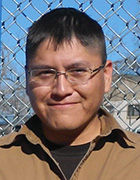
Warren Roan is a credentialed underground storage tank (UST) inspector with the Navajo Nation's Environmental Protection Agency (NNEPA). He inspects UST facilities, such as gas stations, and documents violations of federal UST regulations.
At each inspection, he explains his findings to the owners and operators. He can issue field citations requiring compliance and payment of fines. He also follows up to make sure owners and operators comply, and updates NNEPA and EPA.
Roan coordinates with EPA on targeting inspections and scheduling. His work has helped achieve higher UST compliance rates and prevent contamination on the Navajo Nation.

Emergency Response and Cleanup
The Superfund Emergency Response Program investigates and cleans up dozens of incidents each year in the Pacific Southwest.
EPA Removes Toxics Threatening Humboldt Bay »
The abandoned Samoa Pulp Mill on Humboldt Bay near Eureka, Calif., was a disaster waiting to happen.
When the mill shut down in 2008, it left three million gallons of extremely caustic liquids, 10,000 tons of corrosive sludge, 12,000 gallons of acids, and 3,000 gallons of turpentine, all precariously stored in 20 deteriorating tanks.
The caustic liquids had an extremely high pH of 13 to 14 – strong enough to dissolve wood or flesh. In 2013, the Humboldt Bay Harbor District requested assistance from EPA, which started site stabilization work in September.
Then, on March 9, 2014, a major earthquake measuring 6.8 on the Richter scale shook Humboldt Bay. Because another quake could rupture the tanks, EPA on-scene coordinators sped up plans to remove the toxic liquids.
On March 28, a long stream of tanker trucks began taking the "black liquor" to a mill in Longview, Wash., where it was reused in processing wood pulp to make paper. This $4.5 million removal, the first phase of the estimated $12 million effort, involved five members of the U.S. Coast Guard's Pacific Strike Team, several contractors, and 15 truckers.
The sludges were solidified and trucked to a permitted hazardous waste landfill; the acids were taken to a hazardous waste disposal facility permitted to handle them. On September 10, 2014, the final truckload left the site on Humboldt Bay.
The district plans to reuse the 70-acre site for aquaculture – perhaps growing oysters, or sturgeon to produce caviar.
Response Follows Explosion at Treatment Plant »
 Responders address the aftermath of a chemical explosion in Santa Paula, Calif.
At 3:30 a.m. on November 18, 2014, a vacuum truck exploded at the Santa Clara Waste Water Treatment facility in Santa Paula, Calif., releasing the unknown contents of the tanker across the site.
Upon drying, the released chemical mixture formed fine crystals that ignited on contact in a flash of fire and small explosions. The ensuing fire caused the release of the facility's inventory of industrial chemicals, including strong oxidizers, acids and polymers.
In the initial response, Ventura County's Office of Emergency Services issued an evacuation order to the community within a one-mile radius. The first responders were forced to abandon two fire trucks that were contaminated onsite. The site was also left with a large ponded area containing a mixture of water and hazardous chemicals, surrounded by a surface coating of the unknown shock-sensitive crystals.
EPA partnered with the Ventura County Environmental Health Division and the facility to implement a safe and effective cleanup. The crystals were neutralized, surfaces pressure washed, and the ponded chemical mixture solidified and trucked to the Chiquita Canyon Landfill. The cleanup was completed on January 9, 2015.
Investment Builds Communities
EPA Brownfields grants support community and economic revitalization where reinvestment and jobs are needed most.
Cities Benefit from Cleanups »
Los Angeles, the San Francisco Bay Area, Honolulu, Nevada's Lyon and Churchill Counties, and Mesa, Ariz., were among 171 urban and rural communities across the U.S. to receive EPA Brownfields funding in 2014.
Gaining more than $2.5 million between them, these six communities will clean up and redevelop contaminated properties into affordable housing, transit-oriented development, commercial redevelopment, and community open space.
In Southern California, local community organizations collaborated to create the Larry Itliong Village, which provides 45 units of affordable, multi-family housing close to public transportation. The project utilized a $200,000 EPA Brownfields cleanup grant and an $88,000 Brownfields revolving loan fund subgrant from the California Department of Toxic Substances Control.
In the Bay Area, the City of San Pablo is using $600,000 in Brownfields funding to clean up a former Burlington Northern and Santa Fe rail yard. The property will be developed into a youth soccer facility in a disadvantaged community in need of open space. The project is the result of significant community investment and input and is the cornerstone of planned corridor improvements linking regional transit to a local community college.
In the Central Valley, EPA in 2014 removed three underground fuel storage tanks and tested soil for contamination at a former gas station in Fresno. An additional 37 sites in Fresno County are part of a statewide tank cleanup to help prepare sites for redevelopment.
In Mesa, Ariz., construction of a 3.1-mile extension of the existing regional light rail system along Main Street is underway with the assistance of an EPA Brownfields assessment grant. About 40% of the parcels along the proposed route had historical automotive and industrial operations, resulting in sites contaminated with hazardous substances.
EPA's funding to Mesa complements local efforts to reduce greenhouse gas emissions and the impacts of climate change by providing a world-class transit system.
Green Job Training »
To ensure that local residents benefit from the jobs created by cleanups, EPA has two training programs for green jobs. Both teach adults the skills needed to secure full-time, sustainable employment in the environmental field.
Last year more than 250 graduates in the Pacific Southwest received environmental cleanup certifications and technician skills through funding from EPA's Environmental Workforce Development and Job Training program. This funding supports local job training organizations serving low-income, minority, unemployed and under-employed people living in areas affected by hazardous waste.
In Rialto in Southern California, 17 local residents graduated from a Superfund Job Training program in July 2014, preparing them for jobs in cleanup projects like the nearby Rockets, Fireworks and Flares Superfund site.
Focus on Tribes
Tribal governments face an array of challenges in protecting public health and the environment on their lands.
Settlement Brings $1 Billion to Navajo Cleanups »
 A recent settlement will provide $1 billion to clean up 50 abandoned uranium mines affecting the Navajo.
As a result of a historic legal settlement, Kerr-McGee and its parent, Anadarko Petroleum Corp., will pay more than $4.4 billion to fund environmental cleanups across the country.
Among the biggest beneficiaries is the Navajo Nation, where EPA plans to use $985 million from the settlement to clean up about 50 abandoned uranium mines, where radioactive waste remains from Cold War-era Kerr-McGee mining operations.
The Navajo Nation will receive an additional $43 million to address radioactive waste at the former Kerr-McGee uranium mill in Shiprock, N.M. EPA and the Navajo are now working on their second five-year plan to address approximately 500 uranium mine sites on Navajo land.
Kerr-McGee mined more than seven million tons of uranium ore on or near the Navajo Nation from the late 1940s to the 1980s, leaving behind mine sites and contaminated waste rock piles in the Lukachukai Mountains of Arizona, the Eastern Agency of the Navajo Nation, and nearby mines in New Mexico.
Exposure to radioactive elements in soil, air and water poses risks to human health, including lung cancer. EPA awarded an Environmental Justice Collaborative Problem-Solving grant to Tolani Lake Enterprises, a grassroots organization working to assess exposures from water sources.
EPA, IHS Assist California Tribes in Drought »
Many of California's 109 federally-recognized Indian tribes rely on small drinking water systems that are at risk of running dry during the state's exceptional drought. One small system serving part of the Yurok Tribe on California's North Coast actually went dry in 2014, forcing the tribe to deliver bottled water to customers.
In response to the drought, EPA and the California Area Indian Health Service (IHS) have been working collaboratively with California tribes, encouraging each tribal government to assess their vulnerability, plan for stretching supplies, and identify alternative water sources.
IHS, in partnership with tribes and EPA, identified 13 water systems run by 11 tribes as being at highest risk, with estimated drought-related project needs of $8.6 million. Seven of these tribes made their own drought emergency proclamations, including the Hoopa Valley, Yurok, Tule River, Karuk, Sherwood Valley, Cortina and Kashia Tribes.
EPA has provided funding to eight tribes to develop drought contingency plans, water conservation programs, water audits, leak detection programs and community outreach.
Ultimately, EPA hopes to help tribes develop resilient water systems and sustainable supplies that will be durable in the face of future droughts and other impacts of climate change.