
Progress Report 2015
Tribes of the Pacific Southwest
Building Tribal Infrastructure
$51.5 million
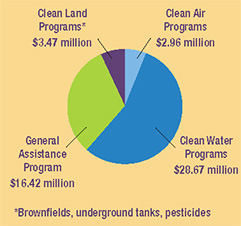
EPA provided $51.5 million in fiscal 2014 to improve environmental protection and public health on tribal lands in the Pacific Southwest. In addition, EPA supports the region's 148 tribes with technical assistance, training and the enforcement of federal environmental laws.
- Clean Land Programs (Brownfields, underground tanks, pesticides): $3.47 million
- Clean Air Programs: $2.96 million
- Clean Water Programs: $28.67 million
- General Assistance Program: $16.42 million
Pyramid Lake Paiute
2.5 Acres
The Pyramid Lake Paiute Tribe constructed about 2.5 acres of tile drain wetlands to reduce nutrient pollution in the Truckee River in northern Nevada. The Truckee River passes through the Sierra Nevada mountains in California and Nevada before emptying into Pyramid Lake, which is entirely on tribal land and roughly the size of Lake Tahoe.
The tile drains are an underground pipe system under agricultural fields that move excess irrigation water back to the Truckee River. This project built a wetlands complex to treat the runoff from the drains, keeping pollutants from plant fertilizers and sediment out of the river.
The project was funded through a competitive grant from EPA under the Clean Water Act.
 Photo: Pyramid Lake Paiute Tribe
Big Sandy Rancheria
Building Code
The Big Sandy Rancheria Band of Western Mono Indians – a community of about 50 homes and 151 residents in the western Sierra foothills – wanted a building code for new homes that would increase energy efficiency, reduce health problems from poor indoor air quality, conserve drinking water, reduce wastewater, reduce construction waste, and lower maintenance costs.
Big Sandy joined the EPA Tribal Green Building Codes Workgroup, which provided access to a range of building codes, information about moisture and mold, alternatives to spray foam insulation, and more. The Tribal Council favored the Pinoleville Band of Pomo Indians' draft Green Building Code and adapted it for their own use in September 2014.

Gila River
Solid Waste Ordinance
The Gila River Indian Community adopted a new solid waste ordinance for their 584-square-mile community, just south of Phoenix, Arizona. The ordinance creates enforceable environmental standards for the storage, collection, transportation and disposal of all solid waste, including hazardous waste generated by businesses and industries on tribal land.
Gila River has been making substantial progress toward sustainability on tribal lands. As development pressures in the area increase, the tribe has pursued alternative energy projects, explored sustainable housing best practices, and considered transportation impacts on community members. Development of its Waste Ordinance was funded in part by an EPA grant.
