
Region 1: EPA New England
Unit Descriptions
A Free ESL Curriculum on How to Prevent Lead Poisoning in the
Home
Created by Education Development Center, Inc.
Sponsored by the Environmental Protection Agency
Going to the Doctor
In this unit, students are encouraged to think about the importance
of routine lead screening at sick or well-child visits to the doctor.
Through patient-physician dialogues, students learn that children
under the age of six are most at risk for lead poisoning and that
all children between the ages of nine months and six years should
be checked for lead. These tests are very important for children
who live or spend time in older buildings that may have lead paint.
Students also role-play a conversation between a parent and a doctor
to help strengthen their communication skills with physicians and
other health care providers about health concerns such as lead poisoning.
Students learn that blood tests can help determine if someone has
taken too much lead before they show any outward signs of illness
and that a lead test result of 10 micrograms per deciliter may be
considered dangerous to children. Finally, students explore ways
that parents can help limit the effects of lead poisoning such as
getting good medical care for their child(ren), feeding their child(ren)
a nutritious and balanced diet, and keeping objects that have lead
away from their child(ren).
Identifying Symptoms of Illness
This unit helps students develop a vocabulary for describing their
symptoms of illness, including those symptoms associated with severe
lead poisoning (e.g., a lead test result that is equal to or greater
than 20 micrograms of lead per deciliter). 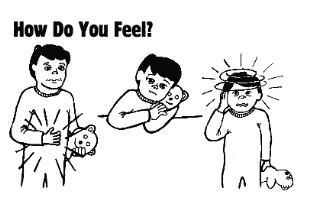 Through a series of patient-provider dialogues and discussion exercises,
students review the general symptoms of illness and the symptoms
of serious lead poisoning, such as stomach aches, loss of appetite,
loss of interest in play, and irritability. Students learn that
most children who have lead poisoning never look sick. In unit activities,
they read and talk about how lead poisoning can cause learning disabilities,
behavior problems, emotional retardation, and stunted growth later
in life. Most important, students learn that prevention is the best
way to protect children from lead poisoning because no treatment
completely removes lead from the body.
Through a series of patient-provider dialogues and discussion exercises,
students review the general symptoms of illness and the symptoms
of serious lead poisoning, such as stomach aches, loss of appetite,
loss of interest in play, and irritability. Students learn that
most children who have lead poisoning never look sick. In unit activities,
they read and talk about how lead poisoning can cause learning disabilities,
behavior problems, emotional retardation, and stunted growth later
in life. Most important, students learn that prevention is the best
way to protect children from lead poisoning because no treatment
completely removes lead from the body.
Making Water Safe to Drink
In this unit, students learn how to test their water for lead and
strategies for reducing lead content in water. Through reading,
discussion, and written exercises, students learn that they should
test their water if their supply comes from a drinking well, pipes
with lead solder, or water known to be very corrosive. Students
are encouraged to collect water samples from home. They also discover
where they can get their water tested (i.e., at certified laboratories).
Students talk about and distinguish between safe and unsafe levels
of lead in the water. They learn that if water has too much lead,
families can reduce the risk of lead poisoning by running the faucet
for a minute before drinking the water, and cooking or washing vegetables
with cold water. Students also examine more costly solutions, such
as using bottled water and installing a recommended filter. This
unit also includes some discussion of pregnancy and lead. Students
learn that lead can pass to the fetus and that lead exposure during
pregnancy may result in miscarriage, low birth weight, birth defects,
and slower development in children. Students review precautions
that pregnant women can take to protect themselves and the fetus
from lead poisoning.
Preparing and Storing Food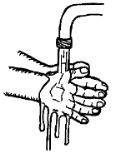 In this unit, students examine the number of ways lead can get into
food: lead dust settles on food stored in open containers; lead-based
glazes on handmade or imported dishes leach into the food;
lead from the soil in city gardens can be absorbed into vegetables;
and lead in the water gets on food during cooking. Through reading,
discussion, and written activities, students learn ways that families
can carefully prepare and store food so that it is not contaminated
with lead. Students also review some additional household changes
that reduce the risk of lead in the home; changes that do not take
much time and can easily become part of their everyday lives. Students
learn that one important way to reduce the amount of lead children
absorb is by preparing and feeding them nutritious and balanced
meals. At the end of the unit, students practice developing balanced
and nutritious menus that include foods high in calcium, iron, and
vitamin C.
In this unit, students examine the number of ways lead can get into
food: lead dust settles on food stored in open containers; lead-based
glazes on handmade or imported dishes leach into the food;
lead from the soil in city gardens can be absorbed into vegetables;
and lead in the water gets on food during cooking. Through reading,
discussion, and written activities, students learn ways that families
can carefully prepare and store food so that it is not contaminated
with lead. Students also review some additional household changes
that reduce the risk of lead in the home; changes that do not take
much time and can easily become part of their everyday lives. Students
learn that one important way to reduce the amount of lead children
absorb is by preparing and feeding them nutritious and balanced
meals. At the end of the unit, students practice developing balanced
and nutritious menus that include foods high in calcium, iron, and
vitamin C.
Avoiding Dangers in the Dirt
Through a story about growing food in the city, students learn ways
to test for lead in the soil and strategies for reducing children's
exposure to lead. Students learn that almost all the lead in soil
comes from lead-based paint chips flaking from homes. They learn
that the danger of lead in soil depends on the amount of lead in
the soil around the house and the amount of soil that gets into
children. In general, vegetables that are grown in soil containing
lead do not absorb much lead, but students learn that they should
wash these vegetables carefully to remove any soil. To determine
if their soil contains lead, students can collect soil samples from
areas in their yard where children normally play and send the samples
to laboratories for testing. They discuss what levels of lead are
dangerous in soil and precautions they should take to reduce children's
exposure to lead in soil.
Finding the Right Home
For many new immigrants in this country, finding the right home
is an important issue. Each family will have its own decision to
make when it rents an apartment or buys a house. This unit explores
the factors that families consider when selecting a home with a
special emphasis on identifying risks of lead poisoning. Students
identify, through a conversation between landlord and potential
tenant, the things that may indicate lead hazards, such as a house
built before 1978; peeling or chipping paint; and painted windows,
doors, and door frames. Students also explore the steps they and
their landlords should take to reduce the risk of lead poisoning.
Again, the issue of pregnancy and lead poisoning is discussed. Students
learn that pregnant women should avoid excessive exposure to lead
in water, soil, and paint (dust).
Identifying Household Hazards
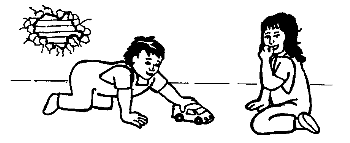 In this unit, students practice identifying household hazards, such
as lead paint. Students explore various safety issues through a
story about concerned parents and learn that the danger of lead
in paint depends on the amount of lead paint in the house and the
amount of lead dust that gets into children. Students identify things
in the home that may indicate lead hazards, such as a house built
before 1978; painted woodwork on doors, windows, or trim; and peeling
or chipping paint. Students also have the option of collecting paint
samples from their homes to test for lead. Finally, they learn that
they can have someone else test their paint for lead and discuss
what the results of a lead paint test mean.
In this unit, students practice identifying household hazards, such
as lead paint. Students explore various safety issues through a
story about concerned parents and learn that the danger of lead
in paint depends on the amount of lead paint in the house and the
amount of lead dust that gets into children. Students identify things
in the home that may indicate lead hazards, such as a house built
before 1978; painted woodwork on doors, windows, or trim; and peeling
or chipping paint. Students also have the option of collecting paint
samples from their homes to test for lead. Finally, they learn that
they can have someone else test their paint for lead and discuss
what the results of a lead paint test mean.
Making Your Home Safe
This is a very general unit designed to point out that lead is only
one of many household hazards that can cause harm to children. The
unit includes a safety checklist that helps students identify hazards
in their home. Students learn that one of the greatest household
hazards is lead and that children with lead in their blood are at
increased risk of developing health and learning problems later
in life. Students also read a story about a young mother who discovers,
at a routine medical checkup, that her children have lead poisoning.
The emphasis of the unit is on the simple steps families can take
to reduce the risk of childhood lead poisoning in their homes. Using
illustrations, students review these strategies and talk about ways
to implement them in their homes.
Renovating Your Home
Home renovations and repairs can increase the amount of lead dust
in the home and, thus, the amount absorbed by children and other
household members. In this unit, students learn that before repairing
or renovating a home or apartment, they should call the local health
department and ask if individuals there or elsewhere can test for
lead-based paint. Students also examine ways to make lead paint
in their homes less dangerous: replacing it, covering it, or removing
it. The first two methods are the safest; the third is the most
dangerous. This unit emphasizes that homeowners should not attempt
to remove lead paint themselves; they should hire a qualified contractor.
Students read and discuss a checklist that describes guidelines
contractors should follow when removing lead.