
Water: Educator Resources
 Education & TrainingEducator ResourcesHow is the quality of our waters determined?
How is the quality of our waters determined?
Every state adopts goals or standards that need to be met for its waters, based on the intended uses of the waterbodies. Different goals are set for different waterbody uses. For example, if the water is going to be used for cooling machinery in a factory, it doesn't have to be as clean as water used for drinking. Scientists monitor the waters and give them one of the following scores:
(GOOD) The waterbody fully supports its intended uses.
(IMPAIRED) The waterbody does not support one or more of its intended uses.
| What is the quality of our waters?
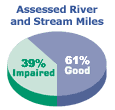
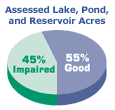
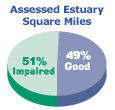
Surface waters are waters that you can see. These waters include rivers and streams, lakes, ponds, reservoirs, wetlands, coastal waters, and estuaries. For the U.S. waterbodies sampled most recently, about 40% are rated as impaired. The charts here show, by the type of waterbody, what percentage of the assessed waters were rated GOOD and what percentage were rated IMPAIRED.
|
   |
|||||


|
||||