
Water: Monitoring & Assessment
 Our WatersWetlandsMonitoring & AssessmentMassachusetts Wetland Bioassessment Pilot
Massachusetts Wetland Bioassessment Pilot
Navigation
Last Updated: March 2000
Contact Information
Bruce K. Carlisle
Massachusetts Coastal Zone Management
100 Cambridge Street
Boston, MA 02202
Phone: (617) 626-1200
Purpose(s) of Project
The Massachusetts CZM project team will apply standardized sampling and surveying protocol to salt marsh study sites to gather biological, chemical, and physical data on two types of sites:
- Reference or minimally disturbed salt marsh sites.
- Salt marsh sites with altered tidal hydrology and/or impacts from surrounding land use.
The project team will analyze and express the biological data through a series of existing metrics or attributes, or develop new metrics or attributes as necessary, based on the project data and literature base. Chemical and physical data will be utilized as supporting information sources.
The team will make recommendations for revisions, additions, or deletions to its current wetlands assessment approach.
Project History

Massachusetts Coastal Zone Management launched its Wetland Assessment Program with its first effort in wetland bioassessment in 1996-1998 at the Waquoit Bay National Estuarine Research Reserve. A subsequent project was implemented on Massachusetts' North Shore in 1997-1999.
EPA Region 1 sponsored the pilot, Cape Cod Salt Marsh Assessment Project, which began in 1999 and will continue through 2001.
In its Wetlands Assessment Program, Massachusetts CZM is supported by the MassBays National Estuary Program and the University of Massachusetts' Extension Service as integral project partners.
Study Design
For this Cape Cod Salt Marsh Assessment Project, the focus will be on assessing the effects of tidal hydrology alterations and surrounding human land use on salt marsh ecological integrity.
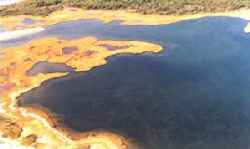
In the 1999 field season, six salt marsh sites with varying types and degrees of intensity of surrounding land use were selected. Two sites with minimal human land use (conservation land and no tidal hydrological alteration) were chosen as reference sites, representing the best attainable conditions in the immediate region. The four other salt marsh study sites have varied land uses including residential, commercial, and transportation. The impacts associated with these land uses include: direct storm water outfalls, large impervious areas, septic systems, lawn fertilizer/chemicals, pet waste, automobile emissions/byproducts, and direct habitat alterations.
For the 2000 field season, three salt marshes with tidal hydrological restrictions—the reduction in normal tidal range and influence through the physical blocking of the tidal channel—will be examined. These sites have either roadway, railroad, or bike-path/recreational corridor crossings over the primary creek or channel that links the marsh with the greater estuarine and marine systems. The restrictive features of these crossings include undersized and/or blocked culverts that restrict at least the full passage of spring high tides and in some cases the passage of normal high tides. Measurements will be made both at the salt marsh affected by the tidal restriction (the restricted study site) and at the salt marsh below the restrictive feature (the reference site). The reference sites or marshes below the tidal restriction receive normal tidal influence and inundation.
In addition, the 2000 field season will also include two additional long-term salt marsh reference sites. The continued development of a robust reference site database is critical to the continuing evolution and application of wetland bioassessment.
Assemblages Monitored: Plants
Sampling Methods: Macroinvertebrates
At each site, a habitat characterization form will be completed that summarizes the ambient salt marsh habitat conditions at the study site. The information collected includes water quality parameters (temperature, pH, dissolved oxygen, salinity, and color) and habitat descriptors on hydrology, vegetation, substrate, available food sources for invertebrates, and degree of human impact.
The sampling protocol will utilize three devices for application in different habitats:
- High tide zone: a D-Net will be employed.
- Intertidal zone: plot sampling using wooden frame (18" x 18").
- Subtidal (permanently flooded) zone: (D-Net, plot sampling, and auger).
At each sampling site three sampling stations will be selected over a defined linear distance of the creek channel. Stations will be located at one-third intervals. At each of the three stations, a representative composite sample of macroinvertebrates will be collected as follows:
- High tide zone at high tide: one D-Net sample.
- Intertidal bank zone at low tide: one plot sample.
- Subtidal estuarine zone at low tide: one plot sample, one D-Net sample, and one auger sample.
Each sample will be placed in a zip lock bag that is labeled with site number, site name, date of sampling, sample number, sampling method, name of sampler. The site field sheets also record the relevant sample numbers. Samples will be preserved in 70 percent isopropyl alcohol and placed in a cooler ready to be transported to the laboratory for sorting and identification.
Invertebrate samples are taken once in May and again in August.
Sampling Methods: Vegetation
At each site, the salt marsh wetland vegetation will be surveyed according to the following protocol. Six transects will be established based on a stratified random sampling approach. A defined linear distance of the salt marsh creek channel is established. The evaluation area will be segmented into three subunits along equal sections of the creek channel. The first third of this length is subunit number one; the second third is subunit number two; and the final third is subunit number three. In each of the subunits, two randomly selected transects will be laid. The transect locations will be determined by a computer random-numbers algorithm.
The transects will run roughly perpendicular from the channel to the upland edge, and each transect will be laid according to a consistent compass bearing. Along each transect, 1 m2 quadrats will be located every 60 meters, starting at the creek edge and progressing along the entire length of the transect until the upland edge. The last quadrat will be located in the salt marsh fringe community, well within the wetland and not on the upland.
Using a standard data sheet, in each quadrat along each transect, every plant occurring within that quadrat will be identified by genus and species. For each unique species within the quadrat, the abundance of that species will be determined using visual estimates of the percentage of the quadrat occupied by that species. At least two investigators will generate species lists and coverage values independently and then compare with one another and with standardized coverage charts. Investigators will also define the community type that the quadrat falls in: low marsh, high marsh, or fringe. Coverage values will be revised if necessary. To be as accurate as possible, coverage estimates include duff, leaves, bare ground, and open water, collectively designated as other. Coverage estimates will be adjusted during the analysis stage to account for the coverage of this other category.
Vegetation surveys will be conducted once at each site during the peak growing period from mid-July to mid-September.
Sampling Methods: Avifauna
Point counts will be utilized as the primary sampling method, using visual and auditory cues. At least two expert observers, including the principal investigator, will sit quietly from a vantage point where all of the evaluation area can be viewed. Using a standard data sheet, all species and individuals will be counted and recorded by the observers, as they are heard or seen demonstrating any activity in the evaluation area or in a 100-foot buffer area surrounding the evaluation area. Counts will be conducted for a period of 20 minutes, separated into four five-minute sample intervals. All individuals will be counted, with a concerted effort not to duplicate individuals. An additional 10 minutes will be allotted to allow observers to walk slowly along the perimeter of the wetland in order to detect any species not tallied in the 20-minute count. Several sites may be visited on the same day, with census beginning at approximately 6 a.m. and ceasing at approximately 8:30 a.m., in order to capture peak activity. Sites will be sampled in late August to capture migrating shorebird usage, since salt marsh habitats are known to have comparatively fewer breeding species.
Sampling Methods: Fish
The sampling strategy will be to capture the channel habitat (subtidal and intertidal) as well as the marsh surface (intertidal). As detailed above, the evaluation area will be divided into three subunits along a defined length of creek channel. Stations will be established for each habitat as follows. In the creek channel, fixed stations will be determined by a computer random-numbers algorithm producing a random integer between zero and 100. The random integer will be the distance of the starting point for the seine haul in feet from the start point (0') of each subunit.
For the marsh surface, throw traps will be randomly thrown once per sampling run in each subunit (three throws per sampling run). Throw traps enclose a small, predetermined area, and can be used to determine fish densities. The sides of the trap jam into the marsh or mud substrate to entrap fish. The fish are then removed by dip nets and individuals are identified and measured. Abundance and total biomass by species are enumerated. All data is recorded on a standardized field sheet.
Seines will be utilized to sample the creek channel. At three stations, as defined above, the seine will be dragged through the water column along the creek bank and substrate for a length of five meters. Seines are carefully withdrawn from the creek and the collected fish are carefully extracted from the seine into a processing bucket. The fish are then removed by dip nets and individuals are identified and measured. Abundance and total biomass by species are enumerated. All data is recorded on a standardized field sheet.
One sample run will be conducted each month from April to October.
Analytical Methods
Biological data collected at wetland study sites are compared to data collected at the wetland reference sites. Multimetric data analysis techniques are employed to examine attributes and variables of biological data and these metrics are combined into a quantitative final index. A metric is a parameter or variable that represents some feature, status, or attribute of biotic assemblage, chemical state, or physical condition. In a multimetric approach, several different metrics are chosen in order to effectively capture and integrate information from individual, population, guild, community, and ecosystem levels and processes. Metrics are selected based on literature reviews, historical data, and professional knowledge. The quantitative output from each metric is then combined to produce an index. An index is the aggregate of weighted metric scores that serves to summarize the biological condition.
Lessons Learned
Through the three pilot projects, the Massachusetts CZM project team has been able to learn from each application. As a result, the team has made several small, incremental revisions to many components of the protocols, including adjustments to sampling methods and shifts in the attributes and metrics examined. Each application has also generated results that indicate decreasing biological integrity with increasing land use stressors. New efforts to engage volunteers through intensive classroom and field training have shown that with proper training and coordination, many of these assessment tools are available to groups and organizations interested in pursuing wetlands bioassessment.