
Contact Pacific Southwest Brownfields
Pacific Southwest, Region 9
Serving: Arizona, California, Hawaii, Nevada, Pacific Islands, Tribal Nations
Job Training for the Environment
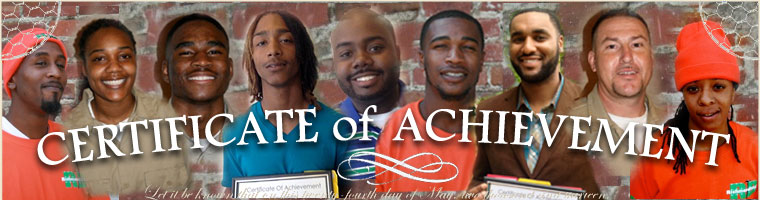
EPA has two job training programs that support green jobs, the Brownfields Environmental Workforce Development and Job Training Program (EWDJT) and the Superfund Job Training Initiative. EWDJT grants fund local job training organizations to teach adults the skills needed to secure full-time, sustainable employment in the environmental field. A majority of students in the job training programs are low-income, minority, unemployed, and under-employed people living in areas affected by hazardous waste. Nationally, EPA has supported the training of over 13,000 students through the EWDJT since the program began in 1998, and approximately 250 students were trained last year in EPA’s Pacific Southwest region.
Students in the job training organizations gain the expertise necessary to secure skilled jobs in environmental remediation, construction, and utility professions. Graduates earn state and federal environmental cleanup certifications, preparing them for full-time careers. In addition to funding from the EPA, the job training organizations leverage the support of many other organizations to make their work possible, equipping people to fill green jobs, reducing environmental contamination, and building more sustainable futures for communities.
Learn more about the graduates of these programs, their accomplishments, and plans for the future in their communities.
RichmondBUILD Job Training Center is located in Richmond, California. In addition to EPA's environmental training, RichmondBUILD also offers training in the construction trades. To supplement classroom training, students also participate in two hands-on solar installations for low-income homeowners in their community. 60 students will be trained under the current EPA funding.
- RichmondBUILD Job Training Center Graduation Interviews
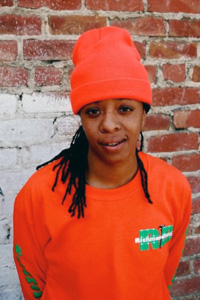
Asronysha Kennedy
Asronysha Kennedy
Richmond native Asronysha Kennedy was an aspiring basketball player until she was sidelined by an injury. After being trained and working as a security guard at Treasure Island, she decided to research other job training programs that could provide her with more marketable skills. She discovered RichmondBUILD and was accepted into the program this year.As one of four women to start the training in her cohort, she was surprised at her ability to come into a traditionally male industry, one she characterized as for "hard men", and succeed. She can now do all that hard work, and can even carry rebar that was a challenge when she started! As the only woman to finish the program, she considers the rest of the cohort her brothers. "My brothers supported me through the training. We are like a family."
The comprehensive training taught Asronysha a lot about construction and safety. Her favorite parts of the training were building the training house, learning about hazardous waste, and learning about safety. She learned to always use the right equipment for the job, and "don't touch anything if you're not certified to touch it." She has been accepted into the Drywall Union's apprenticeship program and has begun working. She is a great promoter of the training program, and has recommended the training program to her friends. Two of them are in the newest RichmondBUILD cohort. Currently Aaronysha is working for IQ Personnel Environmental Staffing while attending apprentice classes.
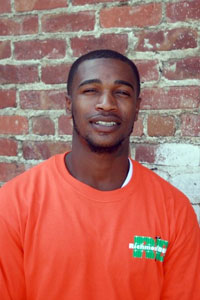
Le Andru Smith
Le Andru Smith
Le Andru Smith was working at an oil refinery when he learned about the RichmondBUILD program through RichmondWorks (the City of Richmond's program to assist residents and businesses with employment and training.) As he progressed through the training, he really liked the hands-on aspect of the work, and learning how to use tools the right way. When asked about his favorite part of the training, he said, "Deconstructing the house was really fun -- more fun than putting it up!" (Add something about the training).One key lesson he took from the training is that it is essential to always be careful and practice safety first. Something unexpected can always pop up, and it's important to be prepared and trained to handle whatever is encountered in the field.
Le Andru has been accepted into the Ironworks union, because, as he says, "I'm know I am an awesome student, so I am going to do well." Eventually he'd like to further his education in environmental safety. Currently, Le Andru is a member of the Iron Workers Local 378 and working in San Francisco with Gerdau Steel.
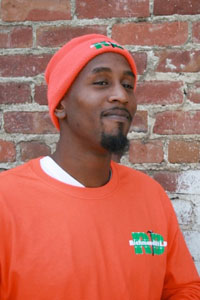
Amin McBurnie
Amin McBurnie
Richmond native Amin McBride found RichmondBUILD through Google, searching for job training programs. He was working a night-shift job, but didn't feel like he could learn much from the job, and he couldn't be with his two children (ages 2 and 5). He succeeded in the training program, and believes he's been taught well.He learned a lot about the hazards and chemicals that exist around us in everyday life, and their impact on health. As part of the training, he learned about asbestos and lead hazards in homes, and how to remove them safely. And every day, he learned different skills. He was excited to get RichmondBUILD every week to learn new things. His favorite part of the training was interacting with the instructors. "They have a lot of great experience. They are high quality instructors." He's excited to enter the Drywall Union's Apprenticeship program, and is an enthusiastic booster for the RichmondBUILD training program. He's recommended the program to several others who are looking for a way to build their skills to support their families. Amin is ready for his next opportunity to be successful and contribute to his community. Currently, Amin McBurnie is working for CPL Staffing while attending apprentice classes.
Cypress Mandela Training Center is located in Oakland, California. It was established after the 1989 Loma Prieta Earthquake. In addition to EPA's environmental training, Cypress Mandela also offers training in the construction trades. 65 students will be trained under the current EPA funding.
- Cypress Mandela Training Center Graduation Interviews
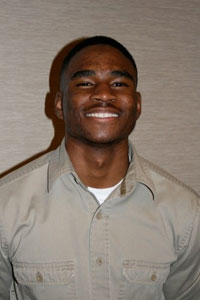
Carl Artis
Carl Artis
For Carl Artis, the Cypress Mandela Training Center is a family affair. His sister graduated from the program 6 years ago. She recommended he try it. He applied, and successfully completed his program in April 2014.He was impressed at how extensive and varied the training was. In addition to the construction skills and environmental training, his program taught him valuable life skills and public speaking. His favorite part of the training was the Hazardous Waste Operators Safety Training (HAZWOPER). This training teaches students how to protect themselves and work safely in hazardous chemical and waste investigations and cleanup. He really enjoyed having to complete a task in full protective gear (Level A) and having to communicate purely with hand signals. He was surprised to learn about environmental hazards that companies leave behind, including underground storage tanks. Especially since he learned how to effectively clean these sites up.
After graduation, Carl continued his studies by entering the Power Pathways program, sponsored by PG&E. Upon successful completion of that training, Carl can anticipate employment by PG&E.
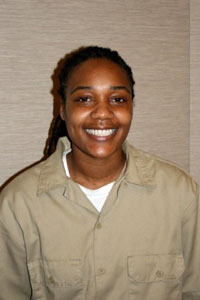
Shante Hooker
Shante Hooker
Shante Hooker learned about the Cypress Mandela Training Center from fliers posted at the Oakland Housing Authority. She attended the orientation and was interesting in going through the training – though it sounded a little bit like boot camp. She wasn't surprised at the rigor of the program; she was prepared.Her favorite part of the training was the Hazardous Waste Operator Safety Training (HAZWOPER). She liked the hands-on aspects of the training. Having to wear the suit, she said, "I felt like I was on the moon! During the test we had to identify hidden chemical. I liked using what I had learned in the classroom to figure out what to do."
One of the most important things Shante learned throughout the training was that safety was very important. "Safety first!" were her exact words. The work place can be dangerous, and there are all types of potential safety risks, including airborne contaminants. She learned how to monitor for and protect herself in these types of work environments.
Since graduating in April 2014, she has entering the Power Pathways program, sponsored by PG&E. Upon successful completion of that training, Shante can anticipate employment by PG&E.
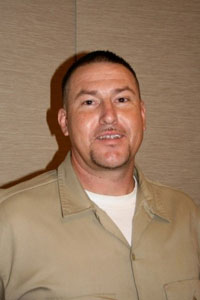
Jeffrey Hendrickson
Jeffrey Hendrickson
Jeffrey Hendrickson learned about the Cypress Mandela Training Center through a realignment program for formerly incarcerated people, Men-of-Valor, in Oakland. Men of Valor referred him to the training program, where he entered the program in January 2014.He was surprised by the amount of information he was presented with and how much he was able to retain in such a short period of time. He went from basic math skills to algebra and trigonometry in just a few weeks. He was very impressed by the amount of knowledge of the trainers had and how much they could impart in 16 weeks. Jeffrey said, "I learned more at CMTC than I did through all of high school."
His favorite part of the training was the camaraderie of the cohort, and learning to be a leader. He said, "We were often put together in different groups, forcing us to work with different people, identifying each other's strengths, and demonstrating leadership in each different situation. I was impressed with the success we were able to achieve working together. We will take this team work, and sense of being a leader, into the work place."
He learned about more than just math and teamwork in the rigorous training. Chemicals can be on a job site and all around. He learned how to safely handle chemicals from identification to containment to transportation. He is continuing his education in the PG&E Power Pathways Program and will be working toward full employment with them upon successful completion of the program.
Hunters Point Family is a non-profit, community-based organization aimed at supporting at-risk youth and young adults in the Bayview Hunters Point community of San Francisco, California. Hunters Point Family offers a green careers program, which includes training in solar installation, native landscaping, and aquaponics. Fifty-four students will be trained under the current EPA funding.
- Hunters Point Family Graduation Interviews
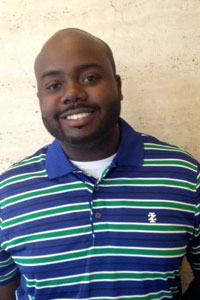
Deantoine Pringle
Deantoine Pringle
Deantoine Pringle was unemployed and looking for work when a high school friend told him about the Hunters Point Family job training program. He said it was a good opportunity to get experience in construction work and develop long-term career options. As part of his training, he learned about the hazards and contaminants that exist in his own neighborhood, Bayview-Hunters Point. It concerns him because he learned about the human impact of contamination on residents, and because he has asthma, is especially concerned about asbestos and other air pollution. He was excited to learn about the cleanup and redevelopment plans that are happening that will improve his community.One of the most important things Deantoine learned in the training was the team work that the construction industry requires. This was especially true in his favorite part of the training, installing rooftop solar panels as part of Solar Green. He also learned how to take initiative at the job site, to ask questions, and to be safe. And he appreciates the importance of being safe, healthy, and open minded on the job site.
Deantoine hopes to get a job with Local 261 in general construction and to make the best of the opportunities he has with the certifications earned though the Environmental Workforce Development and Job Training program. “The training pushed us. There was a lot of support through the training, and I really appreciate all the work of the instructors. I want to succeed to support my 6-year old daughter.”
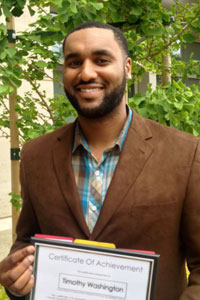
Timothy Washington
Timothy Washington
Timothy Washington was unemployed, and had been in and out of trouble. A close friend of his mother works in construction, and recommended the Hunters Point Family job training program. He decided to give it a try. He was surprised by the depth of the training and the amount he was able to learn over the course of the training. "I didn't know these resources were available under my nose in my own community."His favorite part of the training, without a doubt, was the hands-on learning, and the ability to earn certifications -- learning how to work safely in confined spaces and learning how to install solar panels.
He also learned an appreciation for the environment that he hadn't had before. "The environment is more tender than we have been led to believe. There is much more that we can do to take care of the environment. During this training we learned techniques to protect the environment."
He is looking forward to a career in environmental remediation and is excited to move forward with his career. And he wanted to make sure his instructors know how much he appreciated their work, and to thank EPA for supporting this training program.
Thomas Hill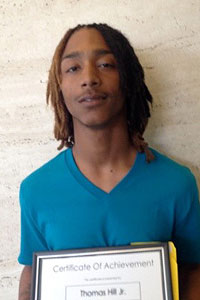
Thomas Hill
Thomas Hill was unemployed, a stay-at-home dad with his 2-yr old son before learning about the Environmental Workforce Development and Job Training program at Hunters Point Family. He really liked the fact that the training program actually meant something. Students heard from contractors in the field about what their jobs were like, about the importance of the certifications.He really liked the hands-on component of the program: installing solar and operating heavy machinery. In fact, installing solar panels was his favorite part of the training. "I liked the height. Maybe I am a height junkie! Seriously, I learned how to be safe up high. I have a better appreciation of what it takes to construct a building. Just look at all of the buildings around us!"
He also learned how to deal with environmental contaminants, and better ways to work with contaminants than people used to do. "Today we are doing this work in more of a 'green' way. We are taking care of our natural resources. This is important because there is pollution all around us. San Francisco is a beautiful city, but you might not know about some of the contaminants that are here."
His hope for the future is to work in the solar panel installation or in lead abatement. He wants to work making people's homes safer and greener. And he wants to share his love and appreciation for Hunters Point Family.