![[logo] US EPA](../gif/logo_epaseal.gif)
Birds
Breeding bird use of seasonal pools in the urban northeast US
Seasonal pools, also known as vernal or ephemeral pools, provide a variety of wetland services including flood storage, groundwater recharge, water quality maintenance, and habitat for plants, invertebrates, and wildlife. In eastern North America, seasonal pools are of conservation concern because they provide important habitat to pond-breeding amphibians and reptiles. While a number of studies have documented the importance of seasonal pools for wetland obligates such as amphibians, less is known about other species such as birds or mammals that may use seasonal pools episodically or for only a part of their life cycle. These and other isolated wetland types have garnered recent attention as the focus of several U.S. Supreme Court opinions questioning their jurisdiction under the Clean Water Act. Information on the functions and services that isolated wetlands provide is needed to inform regulatory and resource management agencies so they can evaluate protection and restoration strategies. This is particularly true in urban watersheds, which are at greater risk from stressors related to urbanization and human activity.
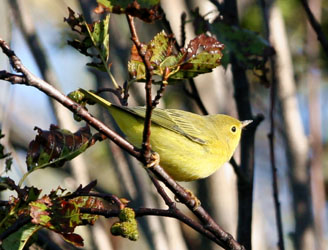
For this project researchers at the US EPA Atlantic Ecology Division and the University of Rhode Island examined avian community composition at seasonal pools across an urbanization gradient in Rhode Island to test the hypotheses that seasonal pools would support a greater abundance and diversity of birds than nearby upland sites. From mid-May through June 2008, we conducted 10-min long, 50-m radius point counts at 33 paired sets of seasonal pools and upland sites, which were located 150 m apart. Bird abundance and diversity was significantly higher at seasonal pools than upland sites, while community composition as measured by evenness was similar. Using occupancy modeling that incorporated detection probabilities, we identified 12 species whose occupancy rates were positively affected by wetland composition surrounding the point count station. We also found that mean abundance of all birds at urban pools was significantly greater than at rural pools. Our results suggest that birds are preferentially using seasonal pools, particularly in more urban settings, adding to the body of evidence that supports the protection and restoration of small isolated wetlands in urban landscapes.
Results are summarized in McKinney, R.A., and P.W.C. Paton. Breeding bird use of seasonal pools in the urban northeast US. Journal of Field Ornithology in review.
For more information contact Rick McKinney (mckinney.rick@epa.gov) or Peter Paton (ppaton@mail.uri.edu).
Wetlands Science is for the birds!
Wetlands provide a number of benefits to ecosystems and human society and they also provide habitat for many of the creatures we see every day.
We are studying the ways in which wetlands provide habitat by examining the use of wetlands by birds. We hope to determine what important characteristics enhance the habitat value of certain wetlands and also how human activities can affect their value to other species.
We’re particularly interested in smaller, isolated wetlands in urban areas e.g., those small and often ignored wetlands behind your local shopping center. While still in the early stages of data collection and analysis, our preliminary results show that these so-called isolated wetlands may have enhanced habitat value to the bird species that inhabit our cities and towns.
Our research will help resource managers who struggle with how to preserve the natural character of the environment in a sustainable way. For example, our results will help to provide information on the benefits of different development scenarios towards maintaining wetland wildlife habitat in a watershed. It may also allow us to identify which specific wetland characteristics enhance the value of created habitats for naturally-occurring plant and animal species.
Go on a field trip and visit some of our sampling sites! (80MB, WMV)
Videography by Ayla Fox, University of Rhode Island